Unmasking AI Website Scams for Strategic Design Success
In a rush? Here's the wrap!
The digital world offers incredible opportunities, but it also harbors pitfalls like AI website scams that promise quick wins but deliver long-term liabilities. We'll help you recognize these deceptive practices so you can build a truly effective online presence.
In This Article
In today's fast-paced digital environment, the promise of a quick, affordable website generated by artificial intelligence can seem incredibly appealing. Many business owners, eager to establish an online presence without breaking the bank, are encountering offers that sound too good to be true. Unfortunately, when it comes to AI Website Scams, they often are.
At Cobble Road Labs, we understand the desire for efficiency and innovation. However, we also believe in enduring craftsmanship and strategic thinking. We want to empower you to distinguish between genuine AI-powered tools that enhance your digital strategy and the predatory tactics employed by fake web agencies looking to make a quick profit at your expense. Protecting your business means understanding these risks before you commit.
This isn't about shying away from technology; it's about making informed choices. We see many businesses fall into these traps, only to find their digital foundation crumbling when they need it most. Let's explore the common signs and dangers of these low-effort, high-risk propositions.
The Churn & Burn Model: Quantity Over Quality
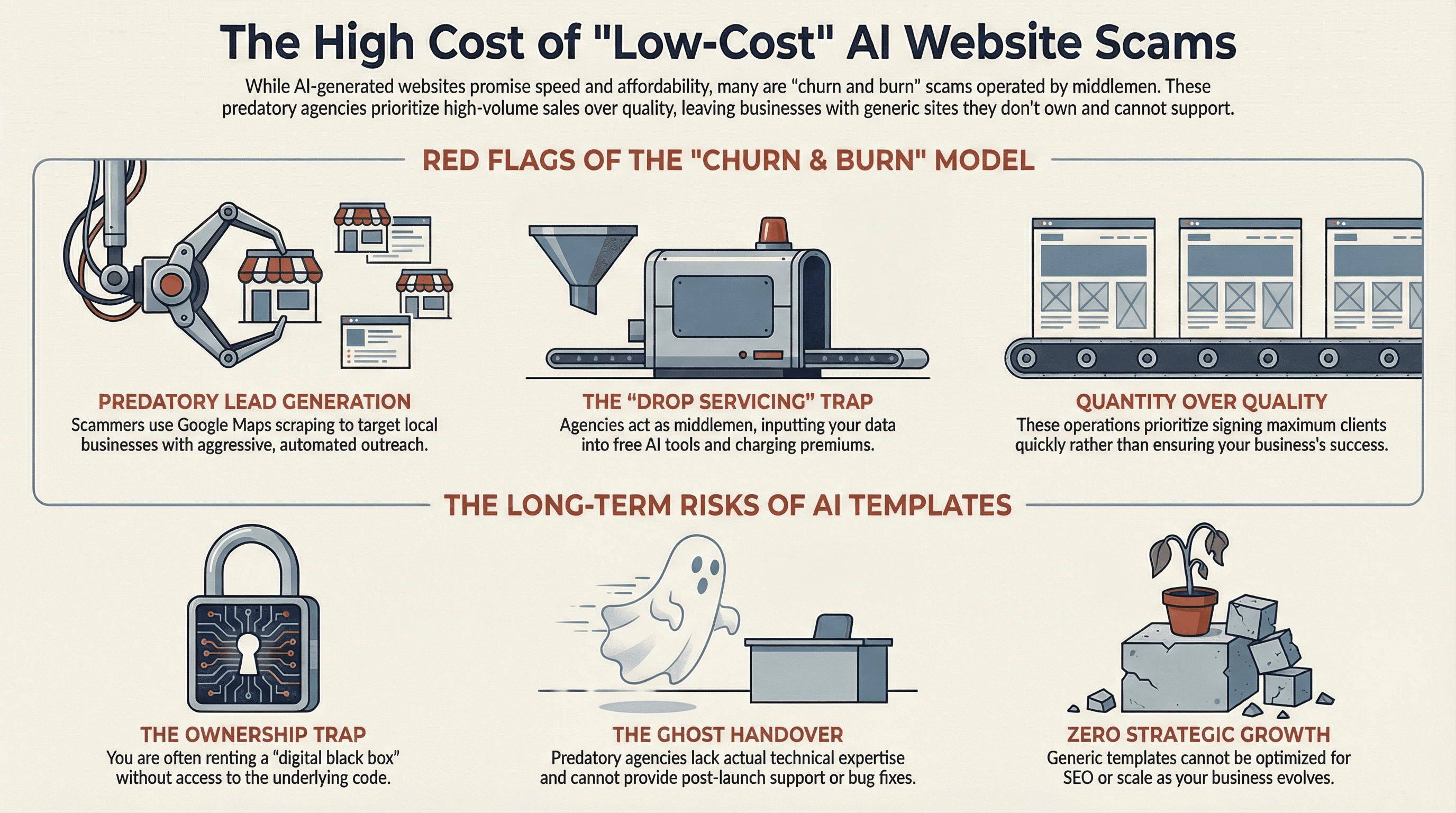
Many of the agencies pushing these low-cost, AI-generated websites operate on a simple, yet damaging, business model: high volume, low effort, and minimal commitment to your success. Their primary goal is to sign as many clients as possible, as quickly as possible, often at prices that seem unbelievably competitive.
These operations frequently rely on Google Maps scraping to generate massive lists of potential leads. They target local businesses, small startups, and entrepreneurs who might not have extensive technical knowledge or large marketing budgets. The pitch is always similar: a professional website, delivered in days, for a fraction of what traditional agencies charge. This aggressive outreach, combined with attractive pricing, makes it hard for busy business owners to resist.
What you're often seeing is a classic drop servicing model, where the agency acts as a middleman. They don't actually build anything from scratch; instead, they use readily available, often free or cheap, AI website builders or templates. Their 'work' involves inputting your basic information into a tool and presenting the output as a custom solution. This allows them to churn out dozens of sites a day, prioritizing quantity over the quality or strategic value of your online presence.
The Ownership Trap: Renting a Digital Black Box
One of the most significant dangers of these AI website scams is the fundamental lack of true ownership you retain over your digital asset. When you purchase a site from these agencies, you're not actually buying a custom-built, transferable piece of software. Instead, you're often just renting access to a site built on a third-party AI platform, which the agency controls.
Imagine investing in a physical storefront, only to find out you don't own the building, the land, or even the right to fix a leaky roof without permission from a distant landlord. That's the digital equivalent of the ownership risk you face. If the AI tool they used goes out of business, changes its terms, or simply stops working as expected, your entire website could disappear overnight with no recourse. We've seen situations where specific AI tools, much like the hypothetical Lovable.dev limitations, meant that clients couldn't export their content or even access the underlying code.
This lack of control extends beyond just the platform's stability. Customization options are often severely limited. You might be able to change text and images, but anything beyond basic template adjustments is usually impossible. This means your website cannot evolve with your business, adapt to new market trends, or implement specific functionalities that could give you a competitive edge. You're stuck with a generic solution, unable to truly make it your own.
The Ghost Handover: When Support Disappears
Another critical red flag with these fake web agencies is their inability or unwillingness to provide meaningful post-launch support or development. Once they've made the sale, their interest in your project wanes considerably. This is because they have no real expertise in web development; they are simply operators of automated tools.
When bugs inevitably arise, or you need updates, new features, or performance improvements, you'll find yourself hitting a brick wall. The 'agency' can't fix bugs because they didn't write the code. They don't understand the underlying architecture because it was generated by an AI tool they simply licensed. This leaves you in a frustrating position, often forced to pay another, more reputable agency to rebuild your site from scratch, costing you more time and money than if you had invested wisely from the beginning.
This lack of expertise also means your website is static. It won't be optimized for search engines in a meaningful way, it won't be designed with conversion paths in mind, and it certainly won't offer a unique user experience. You're left with a digital brochure that looks okay on the surface but lacks the strategic depth to truly serve your business goals. The promise of a 'handover' often means little more than login credentials to a generic platform.
Avoiding these AI website scams is a crucial first step in building a robust online presence. But merely avoiding the trap isn't enough; you need a website that truly works for your business. A template, no matter how quickly generated, is not a strategy, and a generic online presence won't differentiate you in a crowded market. Once you've secured your digital foundation from such risks, the next vital step is to ensure your site isn't just present, but effective, and that's where thoughtful UX Design becomes indispensable, transforming a mere presence into a powerful conversion tool that truly understands and serves your audience's needs and behaviors.
Frequently Asked Questions
Need a better website strategy, but don't know where to start?
Answer 10 simple questions about your business, and we'll generate a personalized technical roadmap just for you. Free.
Get My Roadmap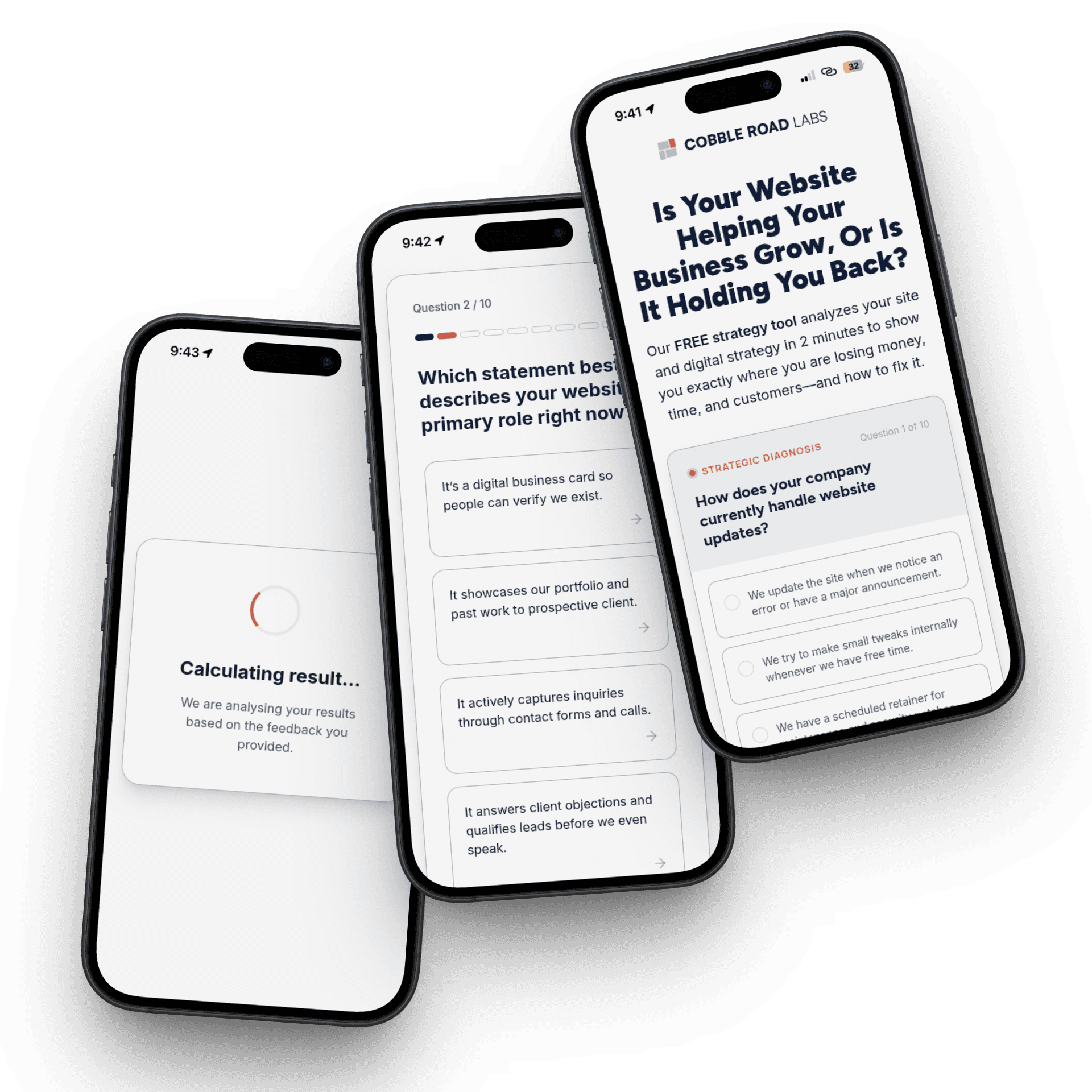
Related posts
Your Website's Strategic Value Demands Thoughtful Design
Is your website a cost center or a revenue driver? Learn how to measure your digital asset's true value and ensure it's working hard for your business.
Your Cheap Website's Secret Debt
heap web design breaks business growth. Learn how technical debt piles up and why strategic investment saves you money long-term.