Why Your 'Fast' WordPress Site Still Falls Behind
In a rush? Here's the wrap!
Many businesses believe their WordPress site is fast because of caching plugins, but true performance comes from clean, optimized code. This distinction directly impacts Google rankings and can lead to significant waste in your ad spend. We help you move beyond these temporary fixes to achieve genuine, lasting speed.
In This Article
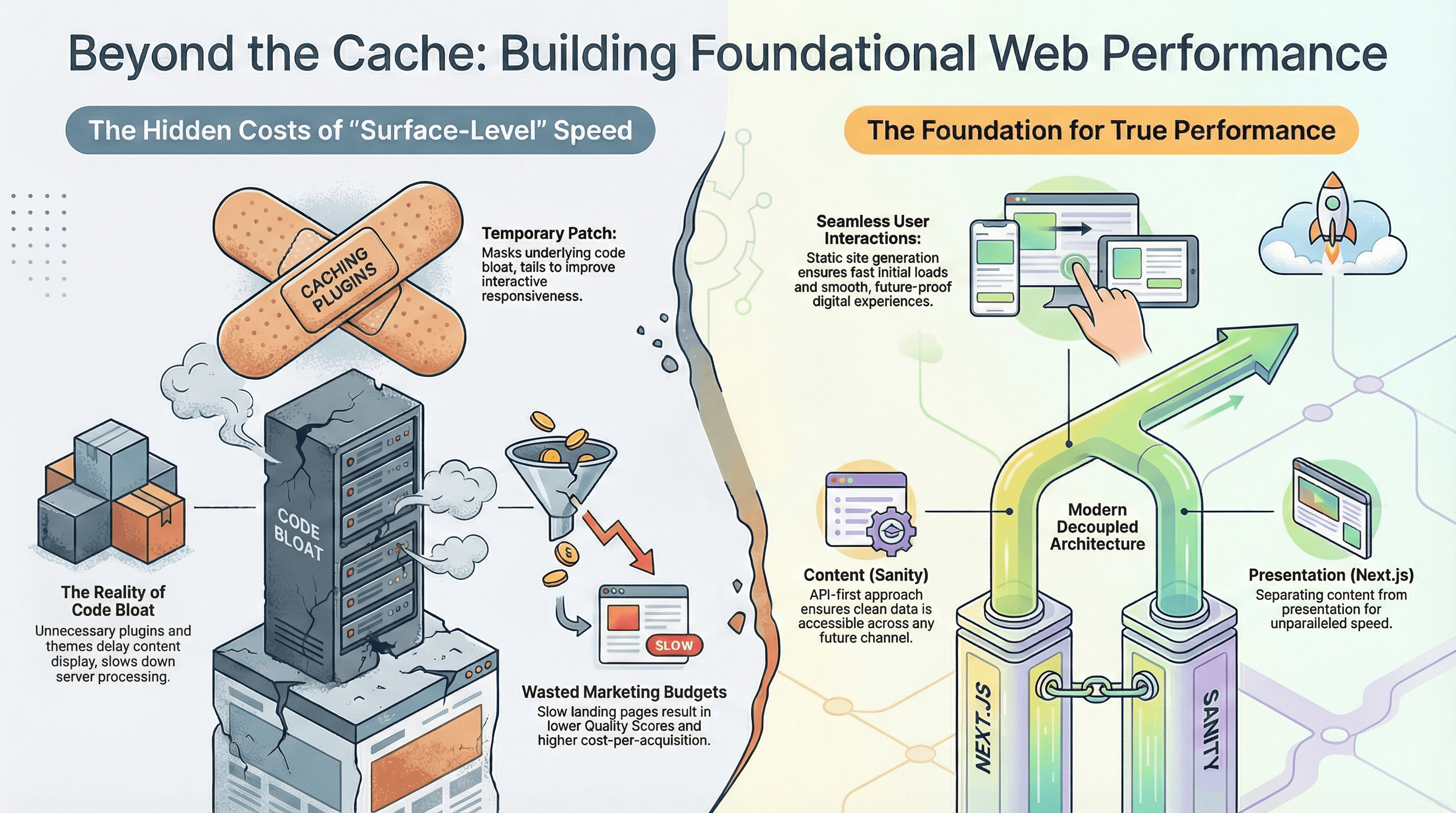
You've likely invested in caching plugins or services for your WordPress site, and on the surface, they make your pages load quicker. We understand why this seems like a complete solution. However, these tools often apply a temporary patch, serving static versions of your site while the underlying code remains bloated and inefficient. Google's algorithms look beyond just the initial load time; they evaluate the entire user experience, including how quickly interactive elements respond and how efficiently resources are delivered. A cached site might pass basic speed tests, but it often fails to deliver the deep, consistent performance that modern search engines and users expect.
The Real Cost of Code Bloat
The core issue with many WordPress installations lies in the accumulation of unnecessary plugins, themes, and database entries. Each adds layers of code that your server must process, even if cached. This 'code bloat' slows down your site's back-end, impacts database queries, and introduces render-blocking resources that delay content display. This inefficiency isn't just a technical detail; it's a direct drag on your business outcomes.
Wasted Ad Spend
A slow-performing site directly impacts your advertising campaigns. When users click on your ads and land on a sluggish page, bounce rates increase. Ad platforms like Google penalize slow landing pages with lower Quality Scores, meaning you pay more for each click and receive fewer impressions. You effectively waste your marketing budget driving traffic to an experience that actively deters conversions. We've seen businesses significantly reduce their cost-per-acquisition simply by optimizing their site's foundational performance.
Building for True Performance
Achieving genuine, enterprise-level performance means moving beyond quick fixes. We partner with businesses to build robust, future-proof websites using modern, decoupled architectures like Next.js for the frontend and Sanity as a powerful, flexible content management system. This approach separates your content from your presentation layer, allowing for unparalleled speed, scalability, and security.
With Next.js, we leverage static site generation and server-side rendering, delivering incredibly fast initial page loads and seamless user interactions. Sanity provides a structured, API-first approach to content, ensuring your data is clean, accessible, and ready for any future channel. This isn't just about speed; it's about building a digital foundation that supports your strategic growth, reduces operational overhead, and ensures your online presence is a true asset, not a hidden liability. We help you make that strategic leap, ensuring your site is not just 'fast,' but genuinely optimized for success.
Frequently Asked Questions
Need a better website strategy, but don't know where to start?
Answer 10 simple questions about your business, and we'll generate a personalized technical roadmap just for you. Free.
Get My Roadmap